Goblin Wrangler
This project was used for my senior thesis. We were tasked to find a topic of our choice that interests us and create a design project around it backed up by research. Goblin Wrangler is a mobile app concept that uses gamification and emotional UI to help users manage tasks through self-compassion rather than productivity guilt. Users care for a mischievous goblin companion by completing real-life tasks, reframing productivity as care and collaboration instead of pressure.
Skills Leveraged
Tools Used
The Problem
Traditional productivity tools often rely on urgency, streaks, and punishment-based systems that can be demotivating, especially for neurodivergent users or people struggling with mental health.
Instead of helping, these tools can reinforce burnout and shame.
Many individuals struggle with
- Task paralysis and avoidance
- Guilt when falling behind
- Apps that feel judgmental rather
than supportive
Design Goals
The goal of Goblin Wrangler was to design a productivity experience that
Encourages self-compassion over discipline
Supports users with ADHD, anxiety, or burnout
Uses playful gamification without punishment
Supports users with ADHD, anxiety, or burnout
Rather than asking “How can users do more?”, this project asked
“How can
productivity
toolsfeel kinder?”
Research & Inspiration
Research focused on
three main areas
- ADHD and neurodivergent friendly
productivity strategies - Gamification psychology
(reward systems, intrinsic motivation) - Emotional UX and non-judgmental interface design
I also analyzed existing productivity apps and habit
trackers, noting a heavy
reliance on streaks, deadlines,
and negative feedback loops that punish inconsistency.
Survey Questions
Productivity
- Have you tried any productivity tools or apps before?
- What did you like or dislike about them?
- How do you currently manage your tasks or to-do lists?
- What are your biggest challenges with productivity or task management?
- Are there any features or experiences you wish
- productivity tools had but currently don’t?
Gamification
- Would you find gamification elements (like rewards or progress tracking) motivating?
- What do you find motivates you the most to complete tasks?
- What kind of support would you appreciate from a productivity tool?
(e.g., encouragement, humor, empathy, etc.)
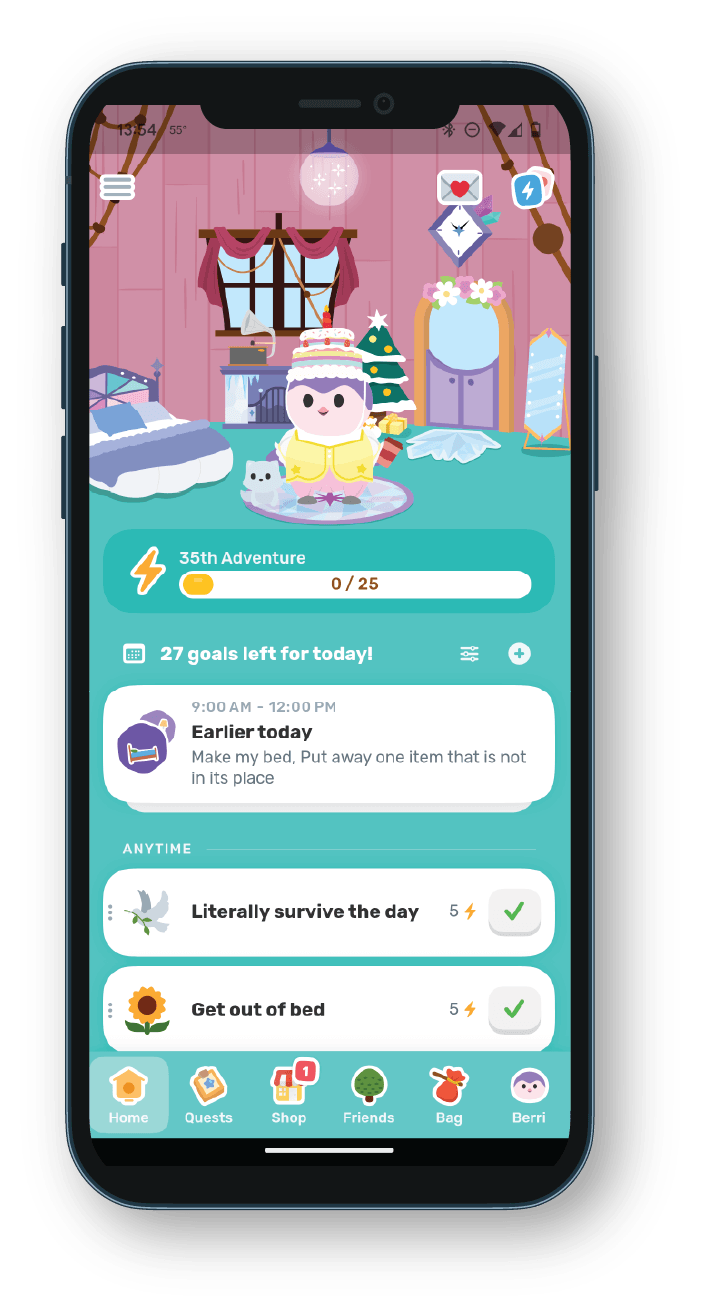
Finch
Self-care app where users care for a virtual bird by completing wellness tasks.
Encourages self-care, emotional support elements
.png)
Llama Life
A time-management app designed for ADHD users.
Uses gentle gamification and structured focus sessions.
Effective for time-based tasks.
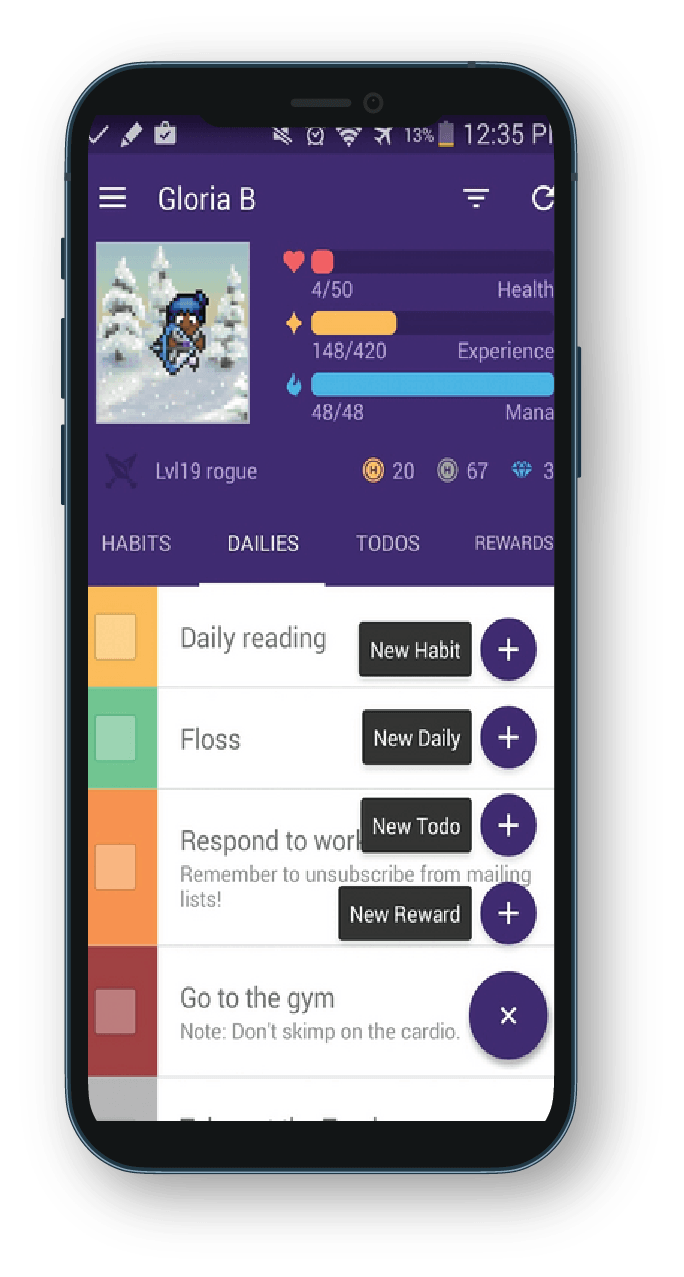
Habitica
Turns task management into a role-playing game.
Uses rewards and punishments for completing or missing tasks.
Strong gamification mechanics.
Key Insights
From research and ideation,
several insights shaped the
design
Tasks feel heavier
when
framed as personal
failures
Punishment systems discourages re-engagement
Positive reinforcement encourages return behavior.Playfulness lowers the
activation energy to start
A friendly character creates emotional safety.The Design Process
The Goblin Companion
Instead of a neutral checklist, Goblin Wrangler introduces a goblin character who is meant to represent unfinished tasks, reacts to progress, and directly benefits from the user's actions
Completing tasks helps care for the goblin, reframing productivity as mutual support rather than obligation.
This approach turns abstract to-dos into tangible, emotionally lighter interactions.
First iterations of characters designs.
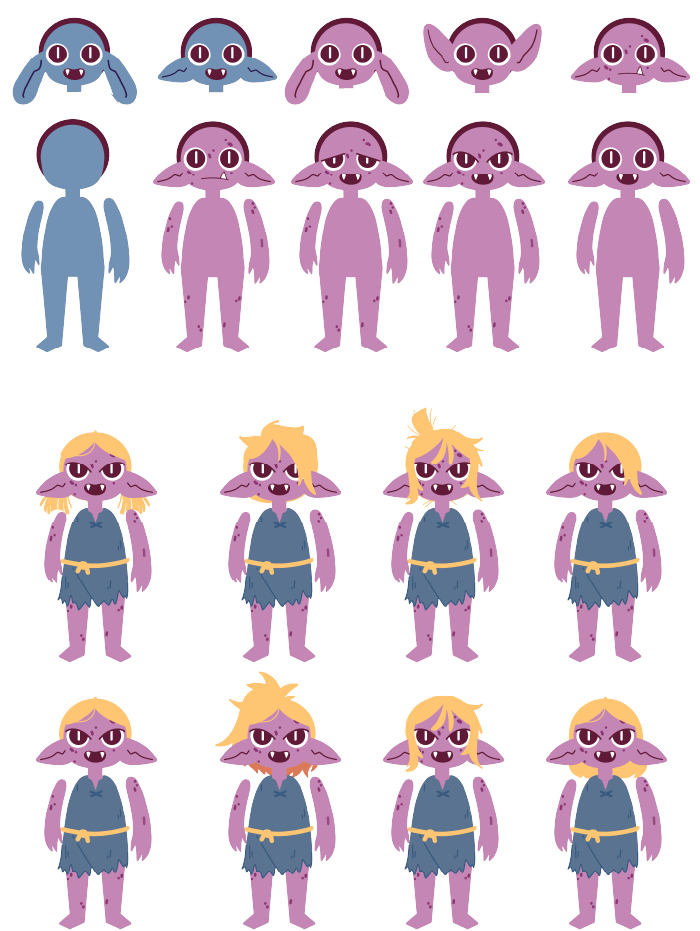
Feedback Received
- Remove small details
- Possibly play with character shapes
- More varied eye shapes
- Higher contrast between skin, clothes,
and hair colours - Test designs on the size display it
would show on
Constraints
- Character must remain simple
- Needs to be able to “wear” clothes
without editing the body very much - More varied eye shapes
- Must allow arm, leg, and head joints
to be easily rigged for animations - Will be seen on a small display
Finalized Design
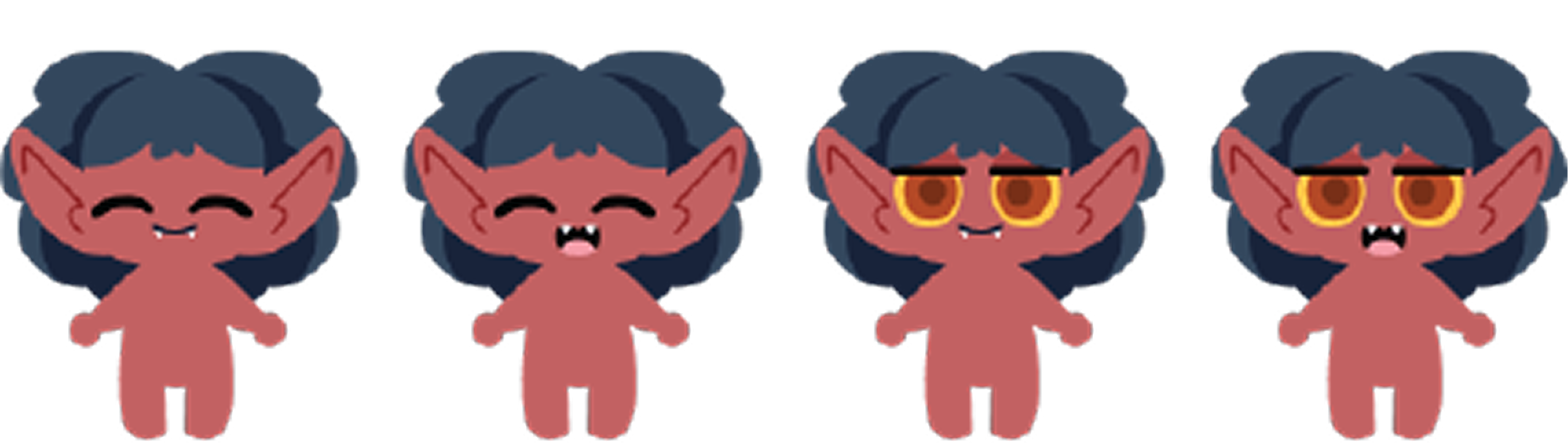
Character was shortened to better fit a smaller screen size. Eyes and head were enlarged to show more expression. Ears are exaggerated for better visibility and express emotion.
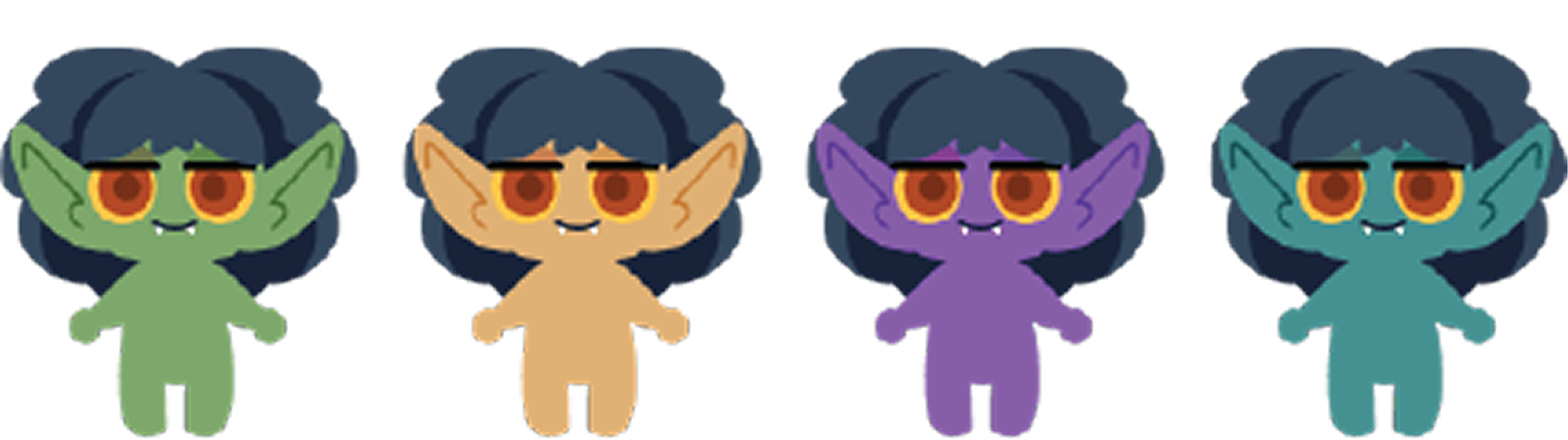
Originally designed with black and white values to ensure higher contrast between various elements. This also allows to easily colour each assets by using a “color” adjustment layer.
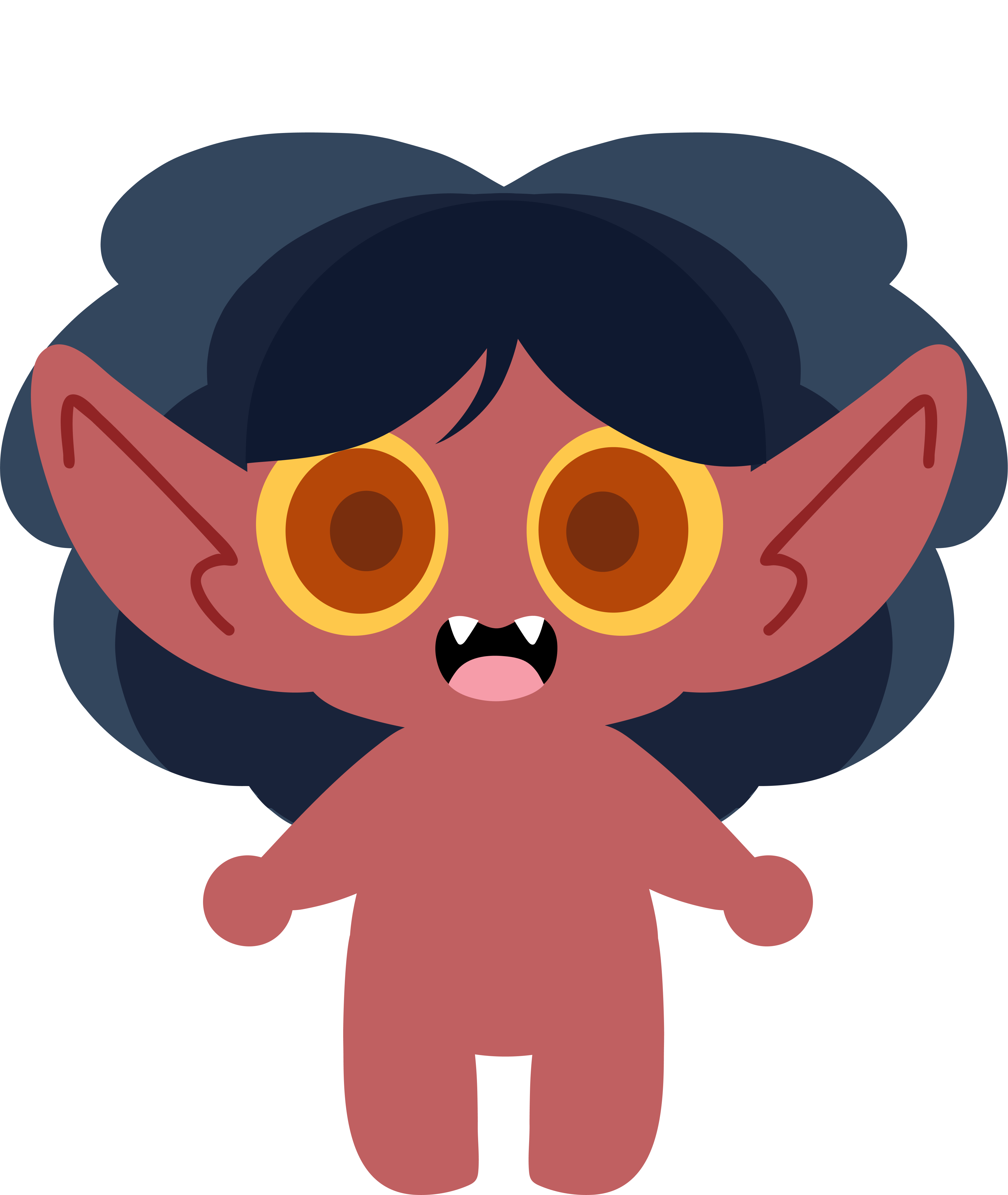
Expression Variations
Color Variations
UI Design
Key mechanics include
- Task externalization through goblin “needs”
- Flexible task completion (no streak loss)
- Visual feedback instead of numerical pressure
- Low-stakes rewards tied to progress, not perfection
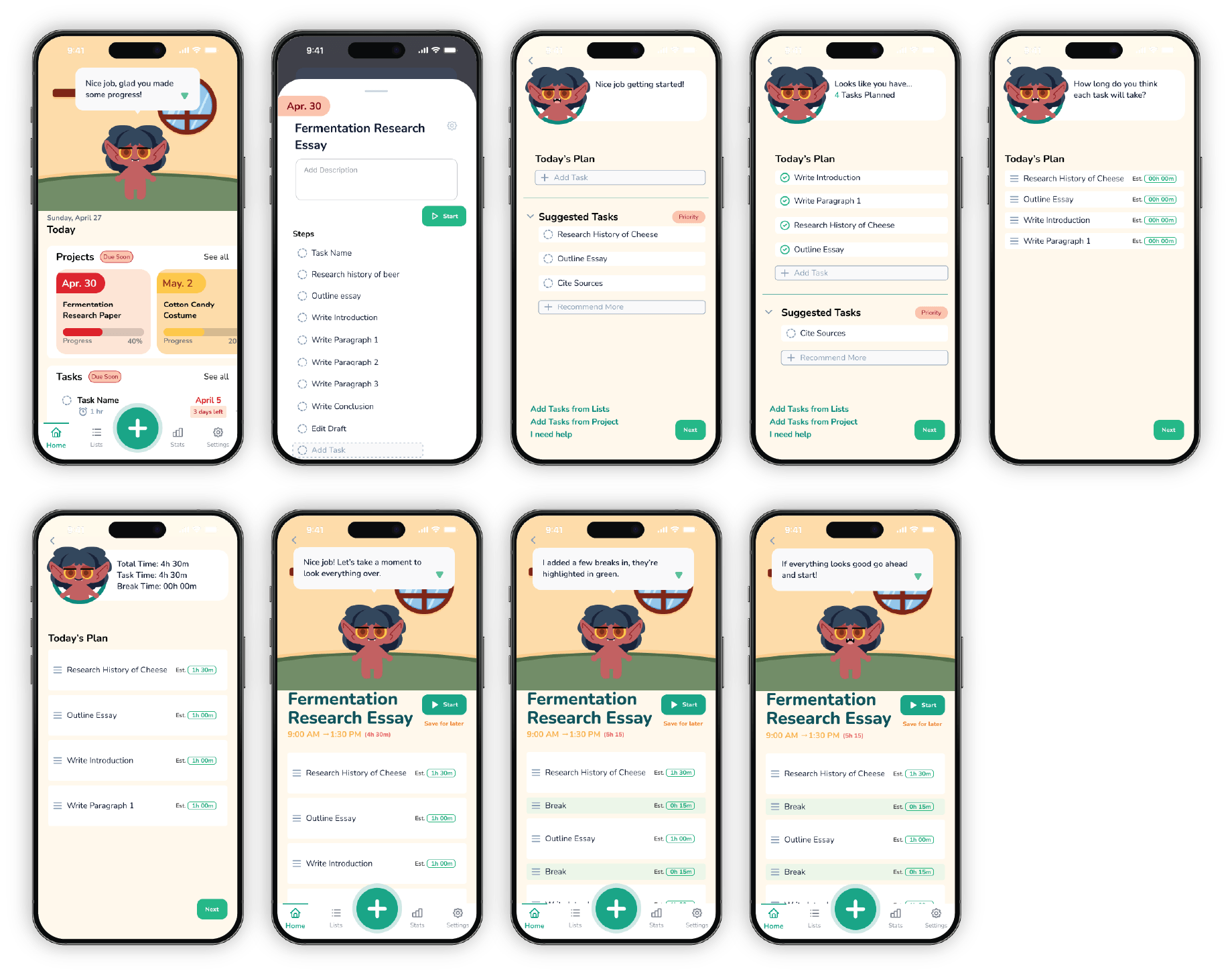
User flows were designed to
- Reduce friction when starting tasks
- Avoid overwhelming the user with too many choices
- Encourage gentle re-entry after periods of inactivity
Low Fidelity Designs
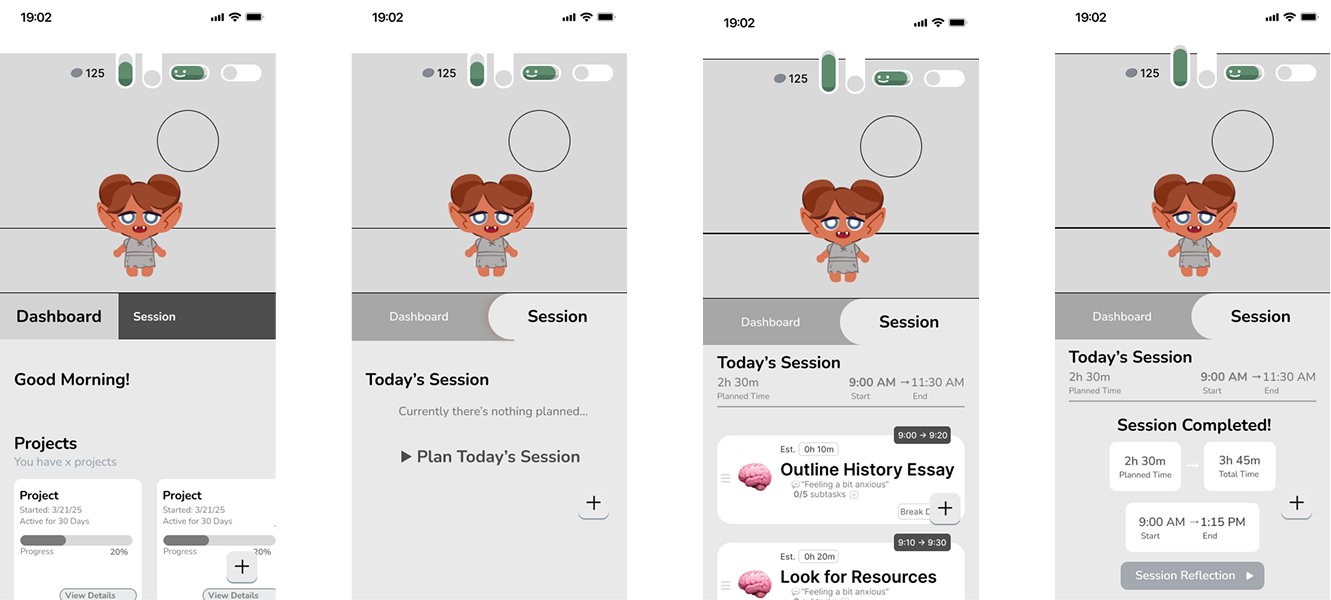
There were multiple iterations of the low-fi, primarily focusing on the main features of the app.
Using the insights from user interviews and research. I made multiple versions of the low-fidelity flow of the goblin interactions and task creation to completion flow.
Originally a shop function was planned, but after being advised to focus on the app’s main functions it I omitted it from the final design.
Task Screen
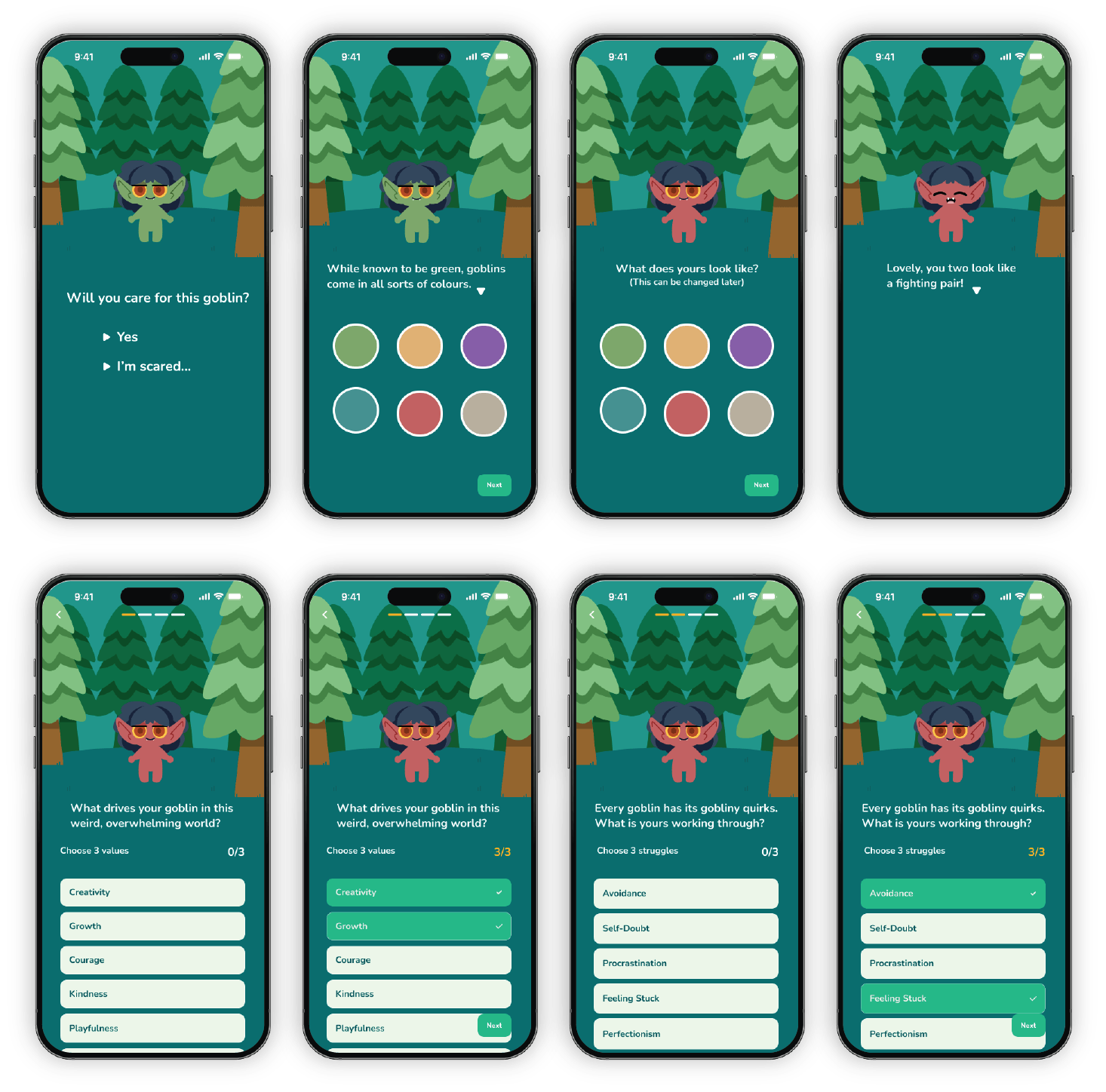
Character Creation
Final Design
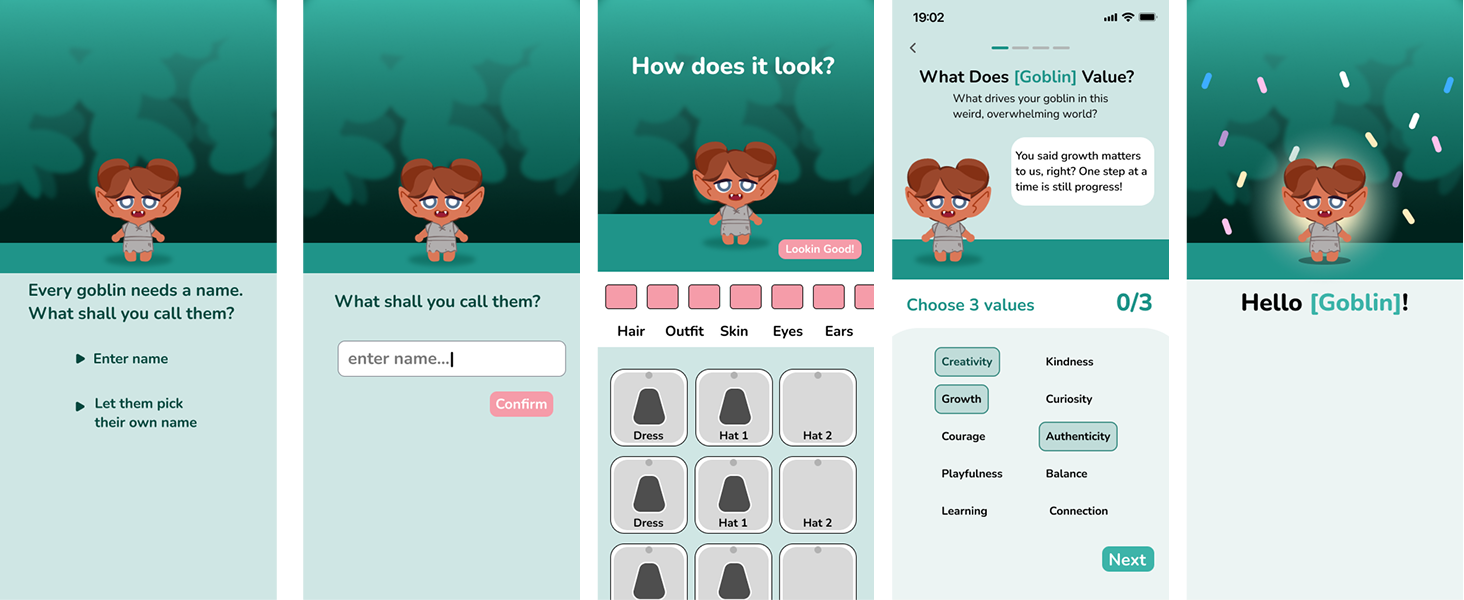
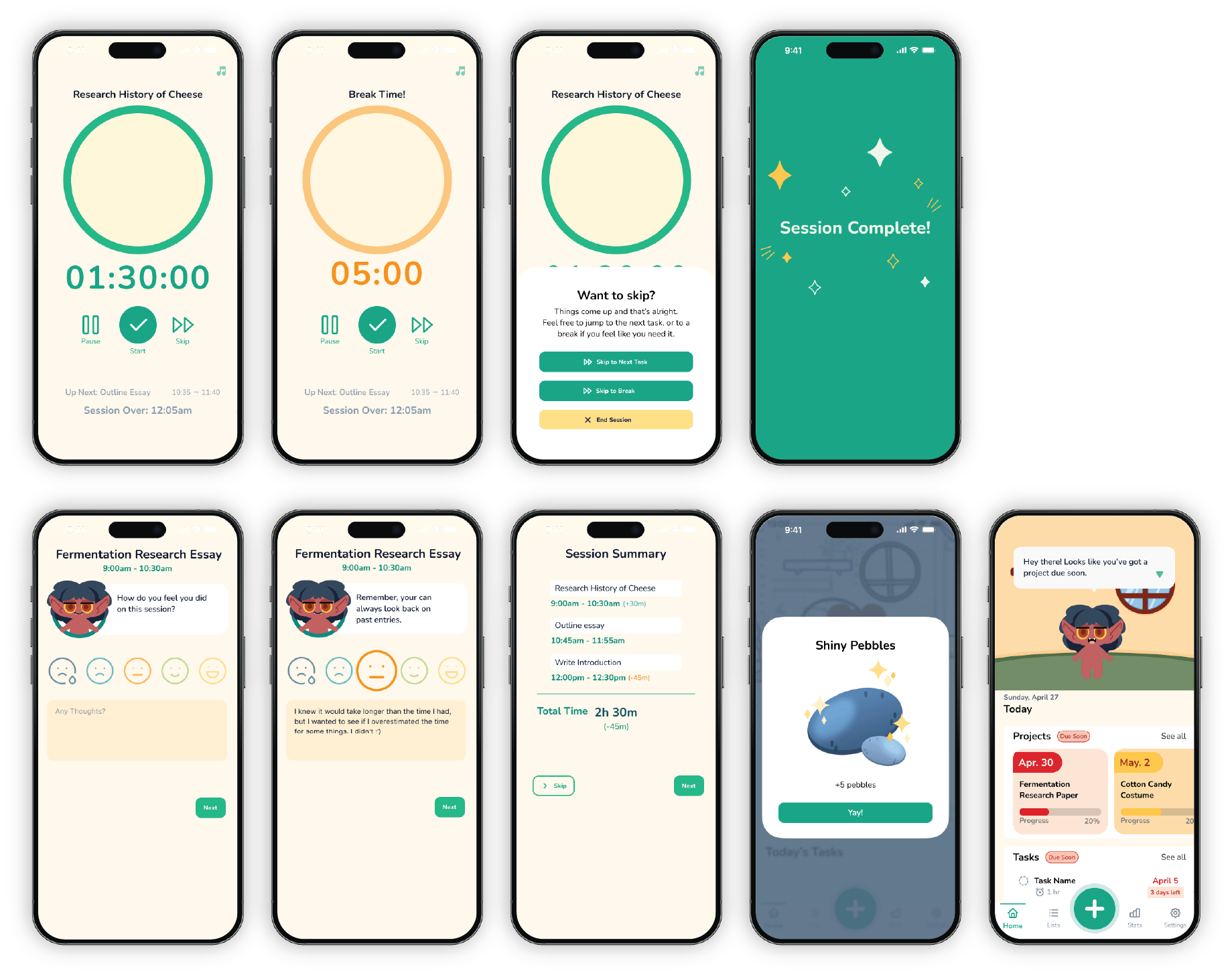
The interface prioritizes clarity and warmth,
ensuring that the UI never feels
demanding
or punitive.
Every visual choice reinforces the app’s emotional tone: supportive,
playful, and forgiving.
Onboarding
Task Flow
Session Flow
Iteration & Evolution
Goblin Wrangler evolved through multiple iterations focused on refining its core interaction loop, emotional tone, and task presentation. Rather than expanding into a larger system, the project was intentionally shaped as a focused exploration of emotionally supportive productivity design.
Goblin Wrangler stands as a self-contained concept that defines the emotional and mechanical foundation of my approach to gamified, human-centered UX design.
This iterative process helped refine
- Emotional feedback systems that avoid pressure
or punishment - Task externalization techniques to reduce cognitive and emotional load
- Clear, approachable UI flows that encourage
low-friction engagement
Reflection & Takeaways
This project deepened my understanding of
- Designing for emotional states, not just efficiency
- Gamification as a supportive tool rather than a manipulative one
- UX design for neurodivergent users
If continued, I would conduct usability testing with neurodivergent users to further validate mechanics and refine feedback systems.